Circles — Concept, Formulas & Examples
Sign in to track masteryFree Maths notes on Circles for CAT-MBA — learn the concept, then practise.
INTRODUCTION
Circles is a very important topic for CAT and other MBA entrance exams. A variety of questions can be asked from this topic standalone or in combination with other geometry topics.
A circle is a set of all points in a plane that lie at a constant distance from a fixed point. The fixed point is called the center of the circle and the constant distance is known as the radius of the circle.
BASIC TERMS
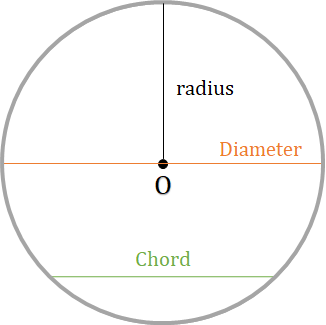
Radius (r)
A radius is the distance between center of the circle and any point on the circle.
 âââââââ
Chord
A chord is a line segment within a circle that touches 2 points on the circle.
Diameter (d)
The longest distance from one end of a circles to the other is known as the diameter. It is equal to twice the
radius and passes through the center.
Circumference (C)
The perimeter of the circle is called the circumference. The value of the circumference = 2Ïr, where r is the radius
of the circle.
Area (A)
Area of a circle = Ïr2.
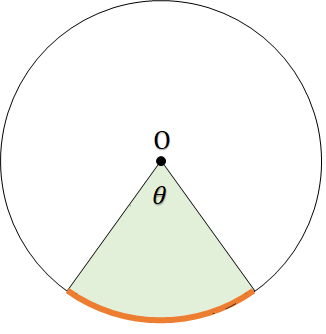
Sector
A sector is like a slice of pie (a circular wedge). [The green shaded portion in the figure below is a sector]
 âââââââ
Area of a sector (with central angle ð) = × Ïr2
Arc
An arc is a curved line that is part of the circumference of a circle. A minor arc is an arc less than the
semicircle and a major arc is an arc greater than the semicircle. [Orange strip in the figure above is the minor
arc.]
Length of Arc (with central angle ð) = × 2Ïr
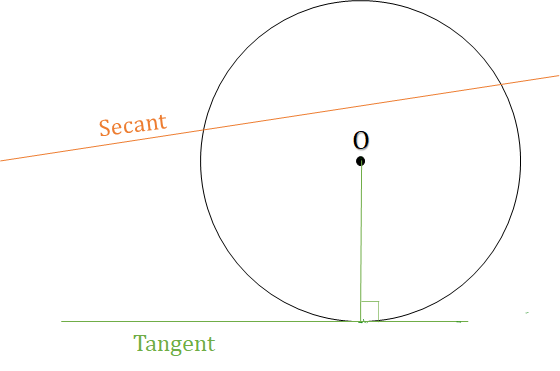
Secant
A line that intersects two points on the circle.
 âââââââ
Tangent
A line that touches only one point on the circle and is ⥠to the radius.
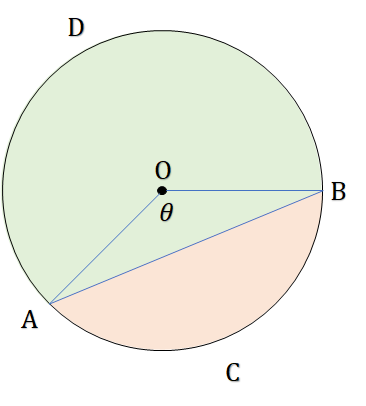
Segment
A chord divides the circle in two parts called segments. The smaller region is called the minor segment while the
larger region is called the major segment.[Green shaded region in the figure below is the major segment while the
orange shaded region is minor segment.]
 âââââââ
Area of minor segment ACB (with central angle ð) = × Ïr2 - × r2 × ðððð
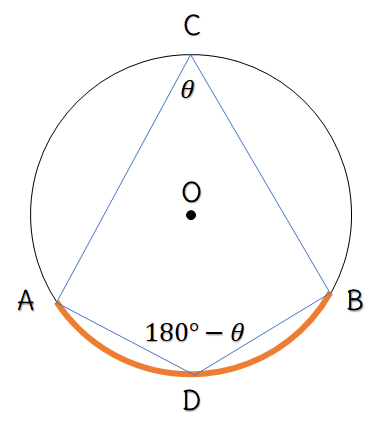
Angle subtended by an arc on the circle in the same segment
Here, the angle subtended by arc ADB in the opposite segment is ð¼° and in the same segment is (180 - ð¼)°.
 âââââââ
PROPERTIES OF CIRCLES
Perpendicular from Center Bisects the Chord
The perpendicular from the center of a circle to a chord of the circle bisects the chord. In the figure below, O is the center of the circle and OM ⥠AB. Then, AM = MB.
 âââââââ
Conversely, the line joining the centre of the circle and the midpoint of a chord is perpendicular to the chord.
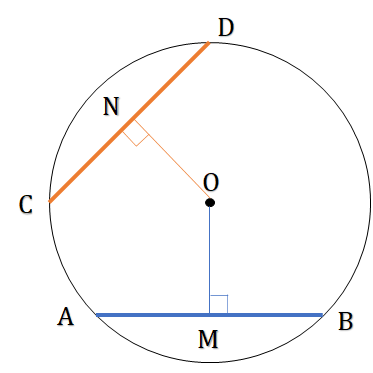
Equal chords are equidistant from the center
Equal chords of a circle are equidistant from the center.
 âââââââ
Conversely, if two chords are equidistant from the center of a circle, they are equal in length.
Also, equal chords subtend equal angles at the center.
Angle subtended by an Arc at center
The angle subtended by an arc of a circle at the center is double the angle subtended by it at any point on the remaining part of the circumference.
 âââââââ
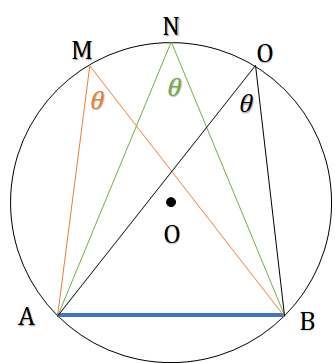
Angle subtended by an Arc on circle
The angles subtended by an arc of a circle in same segment are equal.
 âââââââ
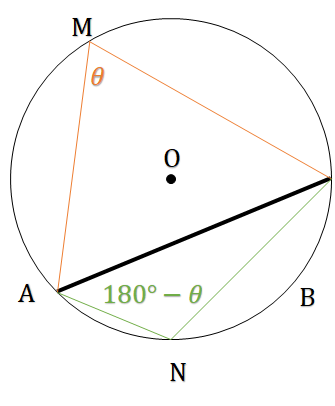
Angle subtended by an Arc in alternate segments
Angles subtended by a chord at distinct points on circumference, in alternate segments are supplementary.
 âââââââ
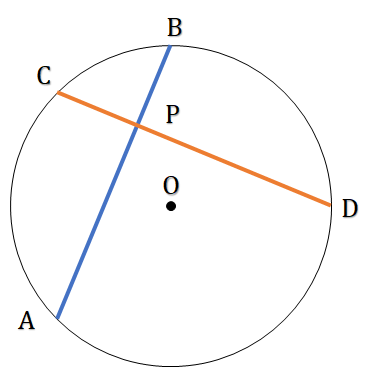
Two intersecting Chords
In the following figure, two chords of a circle, AB and CD, intersect at point P. Then AP Ã PB = CP Ã PD.
 âââââââ
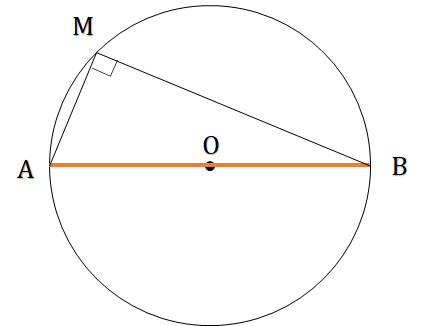
Angle subtended by the Diameter
An angle inscribed in a semi-circle is a right angle. In other words, angle made by diameter anywhere on the circle is 90°
 âââââââ
Radius is perpendicular to Tangent
If a straight line is tangent to a circle, then the radius drawn to the point of contact will be perpendicular to the tangent.
 âââââââ
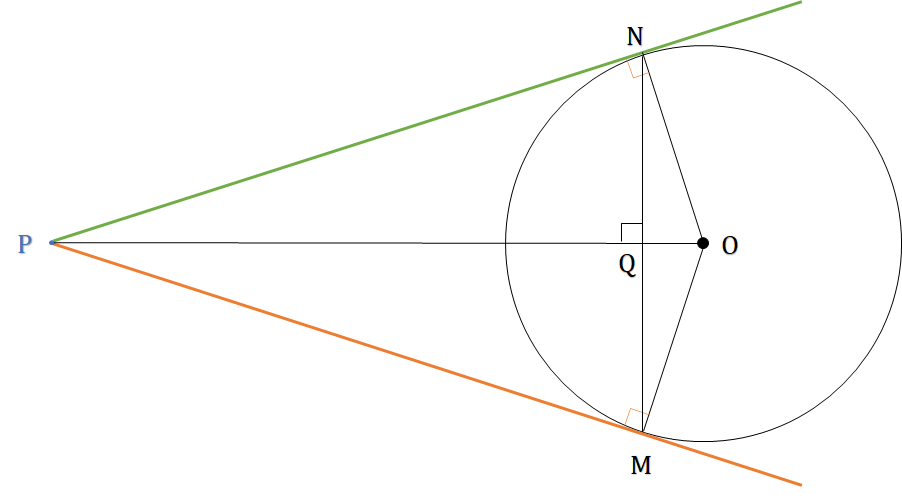
Two tangents drawn from an external point
If two tangents are drawn to a circle from an exterior point, the length of two tangent segments are equal. Also, the line joining the exterior point to the center of the circle bisects the angle between the tangents.
 âââââââ
Here,
âPON â âPOM
PN = PM
MN ⥠OP
â NPO = â MPO = â QNO = â QMO
â NOP = â MOP = â PNQ = â PMQ
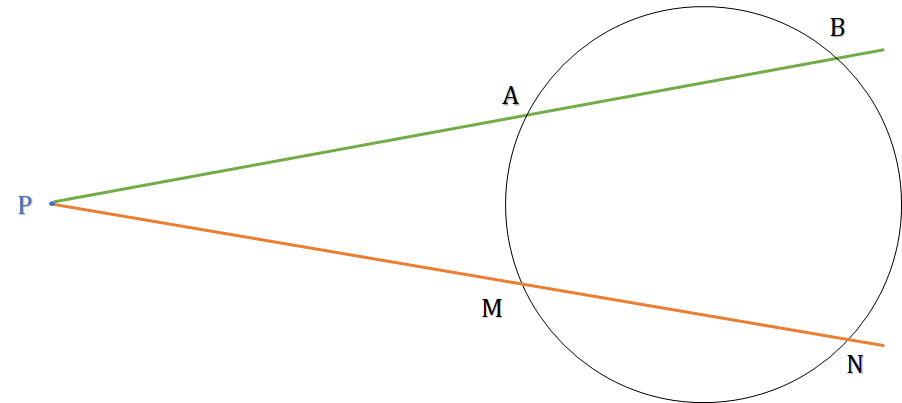
2 Secants drawn from external point
From an external point P, two secants PAB & PMN are drawn. Then, PA Ã PB = PM Ã PN
 âââââââ
Tangent Secant Theorem
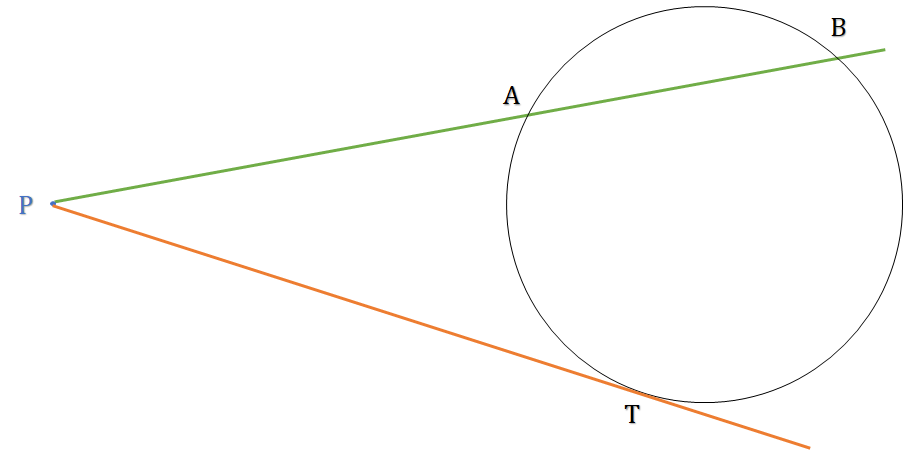
From an external point P, a secant PAB, intersecting the circle at A and B, and a tangent PC are drawn. Then, PA Ã PB = PT2
 âââââââ
Alternate Segment Theorem
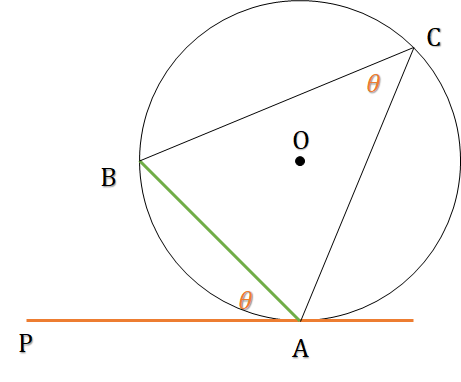
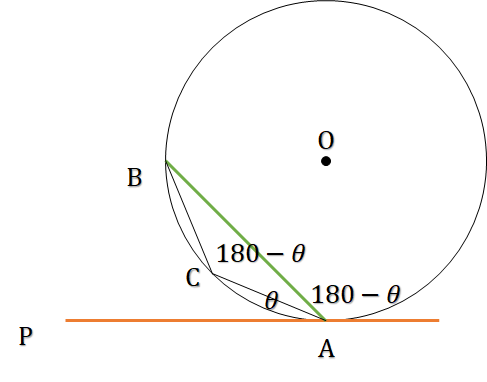
The angle that a tangent to a circle makes with a chord drawn from the point of contact is equal to the angle subtended by that chord in the alternate segment of the circle.
 âââââââ
 âââââââ
Circumcircle and Incircle
Circumcircle: Circle circumscribes the quadrilateral, or Quadrilateral is circumscribed by the circle.
 âââââââ
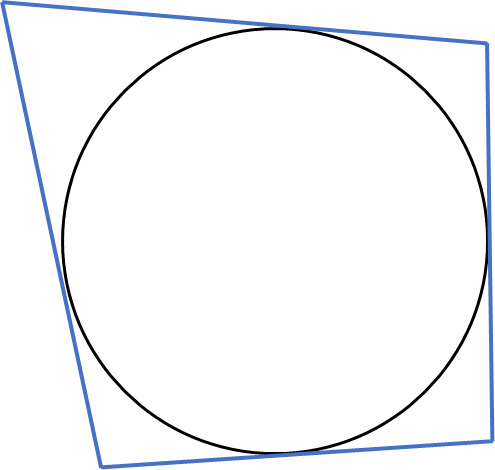
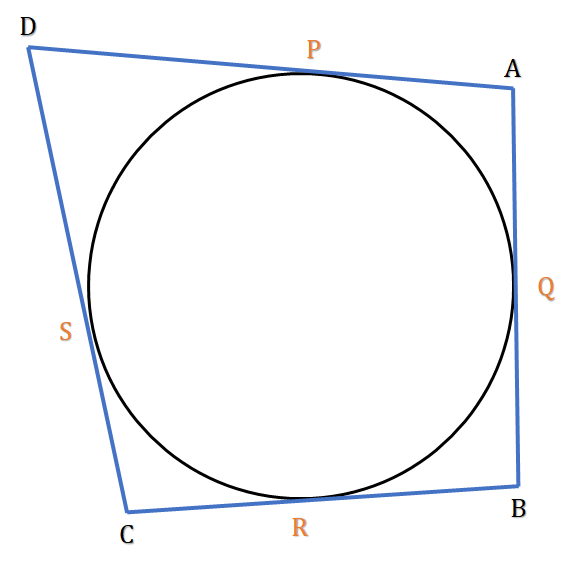
Incircle: Quadrilateral circumscribes the circle, or Circle is circumscribed by the quadrilateral.
 âââââââ
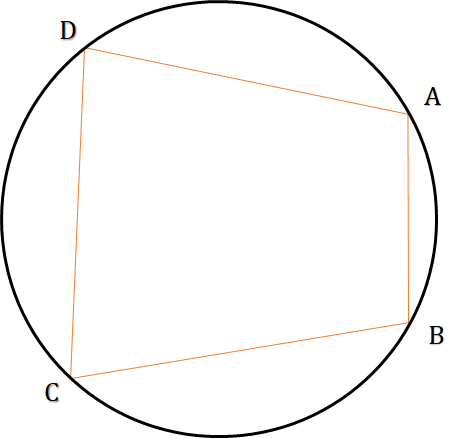
Cyclic Quadrilateral
A quadrilateral whose all 4 vertices lie on the same circle is called a cyclic quadrilateral. The sum of any two opposite angles of a cyclic quadrilateral is 180°.
 âââââââ
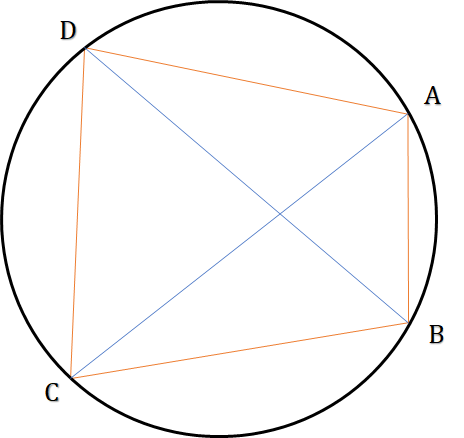
In a cyclic quadrilateral PQRS, the product of diagonals is equal to the sum of the products of the length of the
opposite sides.
⇒ AC Ã BD = AB Ã CD + BC Ã AD
 âââââââ
Cyclic Trapezium
In a cyclic trapezium, the two non-parallel sides are equal and the angles opposite them are also equal, i.e., it is an isosceles trapezium
 âââââââ
Conversely, an isosceles trapezium will always be a cyclic trapezium
Note: If a quadrilateral circumscribes a circle, then sum of opposite sides are equal.
⇒ AB + CD = AD + BC
 âââââââ
Two Circles
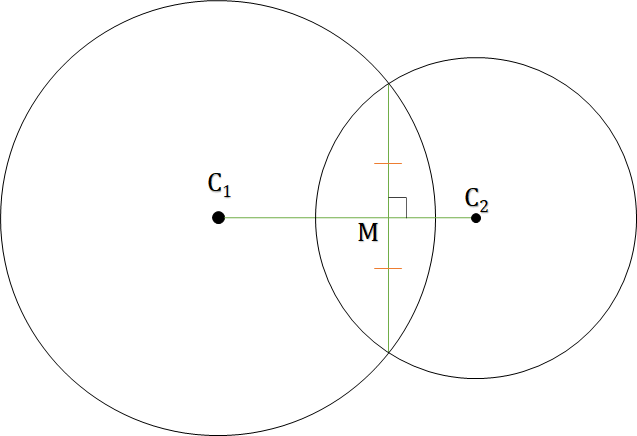
Two circles intersecting
When two circles intersect each other, the line joining the centers bisects the common chord and is perpendicular to the common chord.
 âââââââ
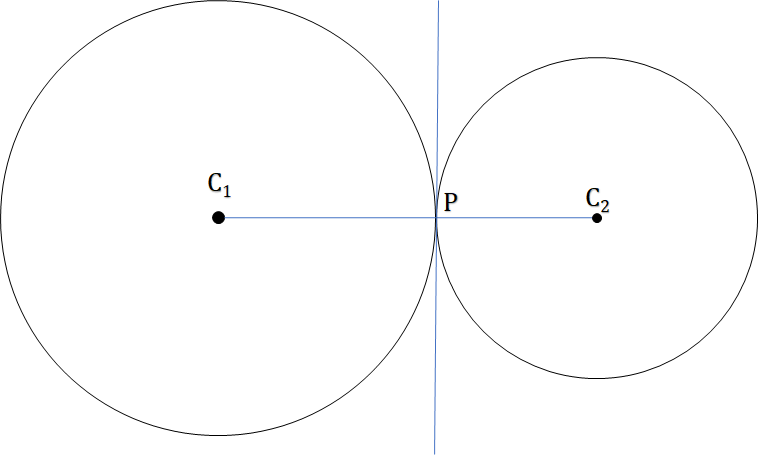
Two circles touch externally
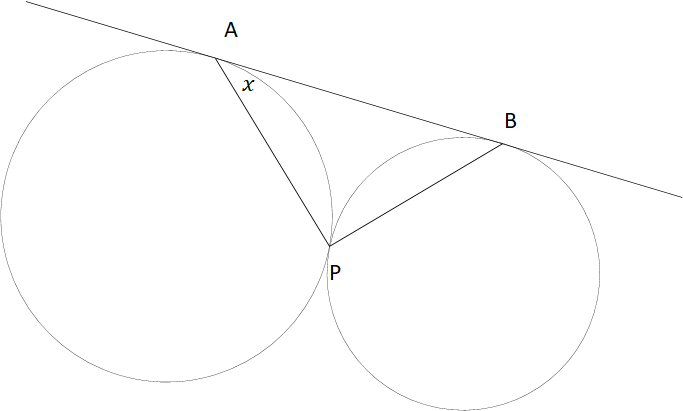
When two circles touch each other externally at a point P, the line joining the centers passes through this point P.
 âââââââ
Common Tangents of two Circles
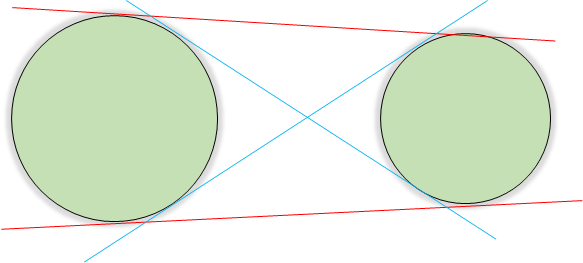
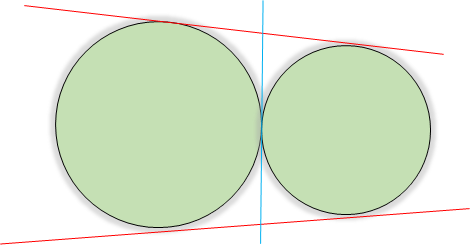
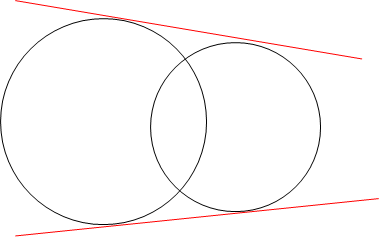
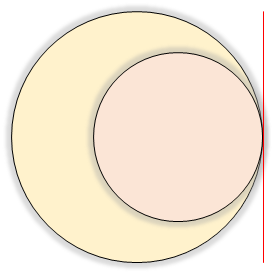
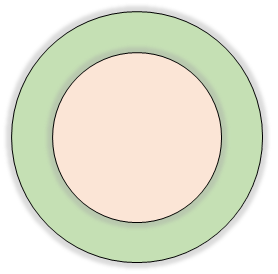
When two circles intersect / touch the number of common tangents will be
4 if they do not touch each other
 âââââââ
3 if they touch each other externally
 âââââââ
2 if they intersect at exactly two different points
 âââââââ
1 if they touch each other internally
 âââââââ
0 if the the smaller circle is completely inside the larger circle
 âââââââ
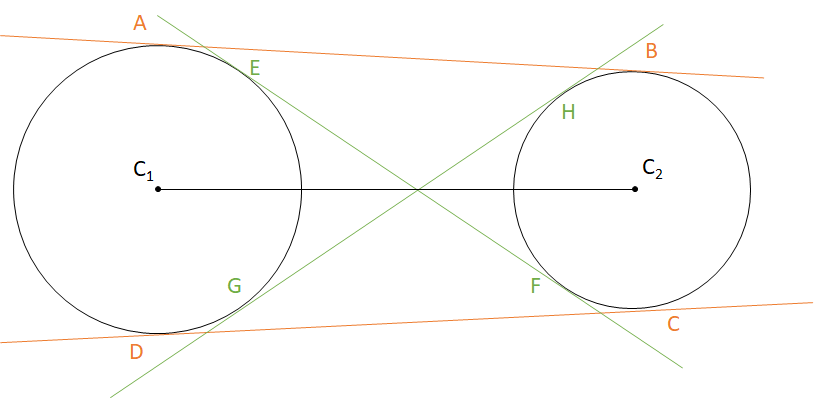
Length of Tangents
Direct Common Tangent (DCT) =
Transverse Common Tangent (TCT) =
 âââââââ
Direct Common Tangent is always longer than Transverse Common Tangent
When two circles touch externally, the length of DCT = 2
 âââââââ
Practise Circles
Sign in to get adaptive practice tuned to your level, with your progress and mastery saved.
Sign in to practiseTrack your progress on Circles
Create a free account to save your answers, see your mastery grow, and get questions you miss back on a spaced-revision schedule.
Create your free account